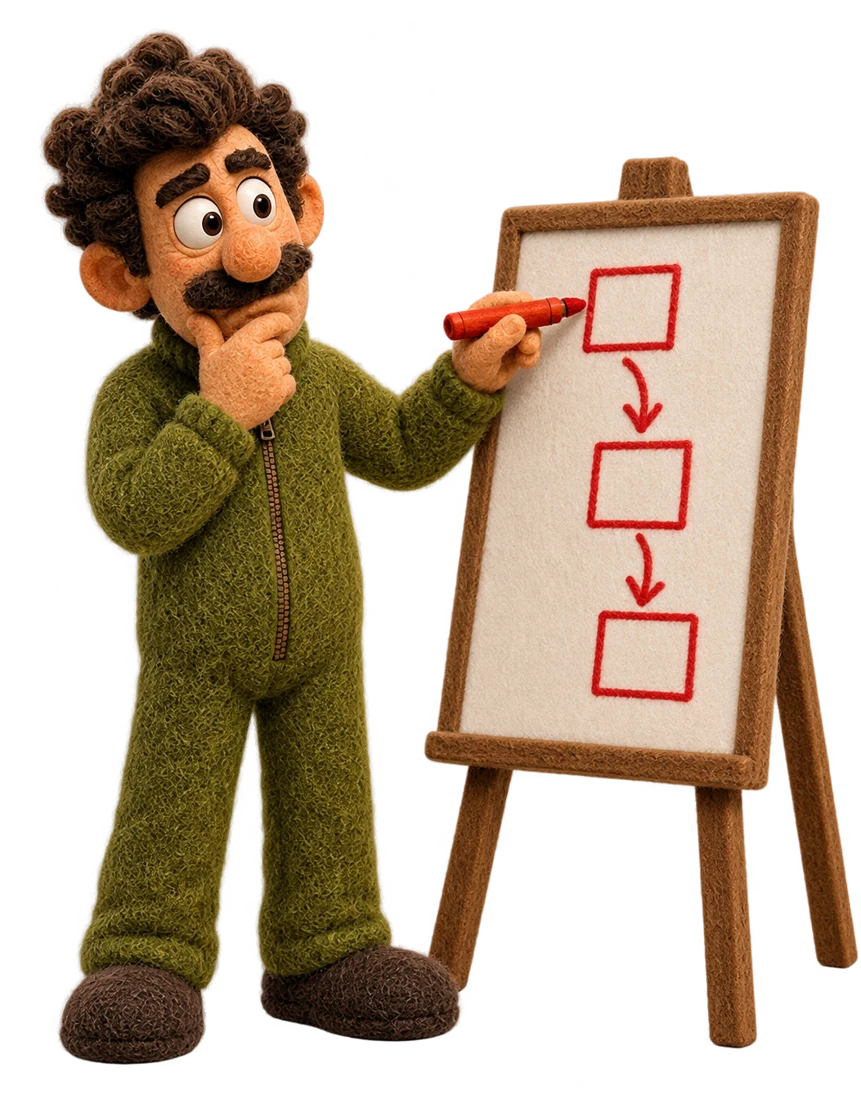
Know whatyou’re building.
Before the logo, before the website: who is this for, what will they pay, and why would they choose you? We answer that first, so everything after it is built once.
Most businesses don’t fail because of a bad logo. They stall because the customer, the offer or the money doesn’t add up, and nobody checked before the spending started.
Strategy is where we check. We look at who has the problem, what they already pay to solve it, what you should lead with, and what it costs you to deliver. Then we turn that into a short written plan: what to do first, what to do next, and what to leave alone.
It works for a new idea you haven’t launched, and for an established business that’s busy but not profitable. Either way, you leave with decisions, not a pile of options.
What weusually hear.
If one of these sounds like you, you’re in the right place.
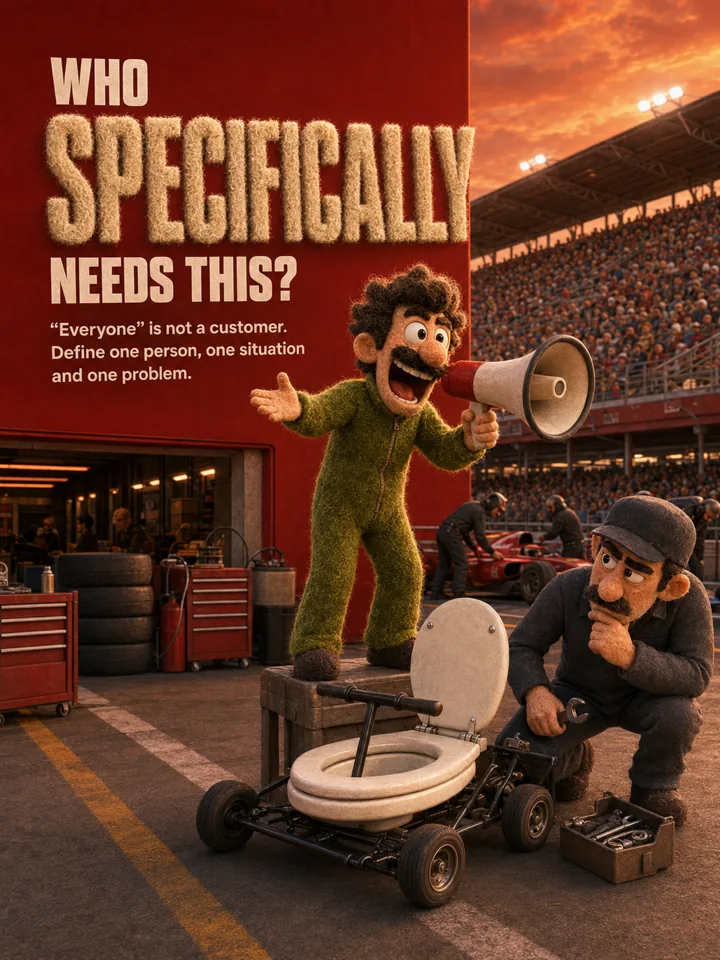
“I’m not sure who this is really for.”
“We’re busy, but we’re not making money.”
“Everyone has an opinion on what we should do next.”
What you get.
We scope each job to what you actually need. These are the usual pieces.
- Customer & offer checkWe find out who has the problem badly enough to pay, how they solve it today and what you should lead with. It’s the cheapest place to get things right.
- Ideal customer, in their own words
- Problems ranked by urgency and value
- The one offer to lead with
- Business model & pricingWe look at how you make money, what each sale really costs you and where the margin is. Then we find the simplest model that works.
- Pricing and packaging options
- Cost to deliver and margin per sale
- Break-even and sales targets
- Market & competitorsWhere you fit, who you’re up against and the gap you can own. We look at what buyers see when they compare you.
- Competitor review of offers, prices and messages
- Your point of difference
- Risks and opportunities
- Go-to-market planHow you reach your first or next customers: the channels, the message and the order to do things in.
- Priority channels and why
- Launch or relaunch sequence
- What to measure from week one
- Turnarounds & stalled businessesWhen sales have dropped or the business has drifted, we find the real cause before you spend on fixes that don’t help.
- Diagnosis of where it stalled
- Quick wins versus structural fixes
- A 90-day recovery plan
- Written planEverything ends in a short, plain-English plan you keep, whether or not we do the work after it.
- Priorities: first, next and not at all
- Owners, timing and rough budgets
- One recommended next step
Five steps.
What happens, in what order, and roughly how long each part takes. Timings depend on the size of the job, and we confirm them in your proposal.
- 1Day 1Tell us where you’re atSend a short brief and book a free 20-minute call. We’ll tell you honestly if strategy is the right place to start.
- 2Days 2–5Intake & homeworkYou fill in a focused questionnaire and send what you have: numbers, sales history, past plans. We read it all before we meet.
- 3Weeks 1–2Strategy session or DiagnosticA Strategy Session tackles one decision in a focused call. A Diagnostic looks across the whole business and finds the main problem.
- 4Within 5 days of the callYour written planYou get a short report with the priorities, the reasoning and the numbers behind them. No jargon and no 80-page decks.
- 5When you’re readyBuild it, with or without usTake the plan and run with it, or ask us to scope the next step. Either way, you’re not locked in.









Good to know.
Do I need strategy if I just want a logo?
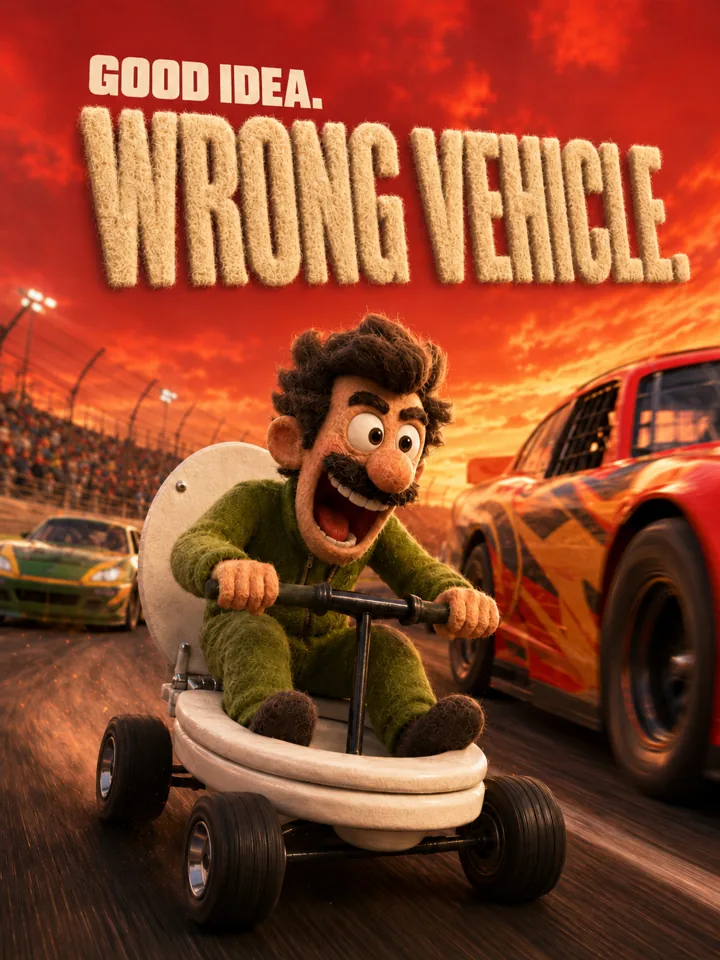
Often, yes. A logo built on an unclear offer gets redone within a year. A short Strategy Session is usually enough to know.
Do you work with ideas that haven’t launched?
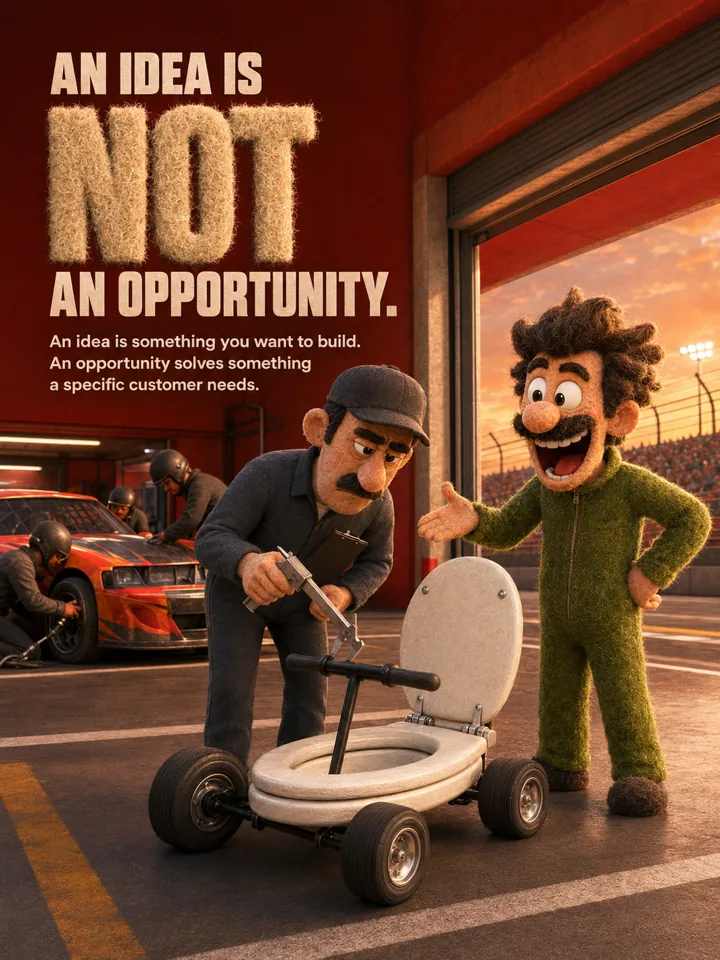
Yes. Testing an idea before you spend on it is the cheapest time to get it right.
How long does it take?
A Strategy Session is one call. A Diagnostic takes about two weeks from intake to written plan.
What’s the difference between a Strategy Session and a Diagnostic?
A Strategy Session tackles one decision in a focused call. A Diagnostic looks across the whole business, finds the main problem and gives you a written action plan.
Will you tell me if my idea isn’t worth doing?
Yes. Telling you early is the most useful thing we can do. We’d rather save you the money than build something that won’t sell.